Monday, December 21, 2015
Gwen Verdon in Gentlemen Marry Brunettes
After the 1953 success of Gentlemen Prefer Blondes starring Marilyn Monroe and Jane Russell as showgirls Lorelei Lee and Dorothy Shaw, United Artists bought the rights to But Gentlemen Marry Brunettes, the 1927 novel written as a sequel to the original 1925 book by author Anita Loos.


Tuesday, December 15, 2015
Watch and Wear: Oscar Micheaux
Oscar Micheaux was an African-American film director and author. At the time of their release, his black cast films were categorized as race movies and played only theaters that catered to African-American audiences. This post is to introduce you to his work rather than his biography - which can be read (in short) on his Wikipedia page. Many of his films and books can be viewed and read (respectively) and downloaded from archive.org. Posters from several of his films can be worn on crew d'tees t-shirts - the only Oscar Micheaux fashion available!
Within Our Gates, 1920, silent
Ten Minutes To Live, 1932
Lem Hawkins' Confession also released as Murder in Harlem, 1935
Swing, 1938
Lying Lips, 1939
Conquest: The Story of a Negro Pioneer 1913
The Forged Note 1915
The Homesteader: A Novel 1917
Films
Within Our Gates, 1920, silent
Ten Minutes To Live, 1932
Lem Hawkins' Confession also released as Murder in Harlem, 1935
Swing, 1938
Lying Lips, 1939
Books
Conquest: The Story of a Negro Pioneer 1913
The Forged Note 1915
The Homesteader: A Novel 1917
crew d'tees Shirts
crew d'tees has created two t-shirts to honor the genius of this renaissance man and cinematic auteur.
Sunday, August 2, 2015
From Tallulah Bankhead to Mary Martin
All Tallulah's scenes in a badly digitized TV rip
See below if you want a good version
of the Mary Martin Sings There's Music In You video compilation.
Richard Rodgers, Oscar Hammerstein II and Mary Martin in
There's Music In You. Note the spelling of 'Rogers' name in the call board.
Main Street To Broadway also has the following scenes and attributes.
- Helen Hayes instructs a young actress how to focus before introducing the film and discussing the soon-to-be-demolished Empire Theatre. She returns to narrate the play's opening and list the luminaries attending.
- Shirley Booth talks with, and signs autographs for, fans and demonstrates why she is so beloved. (See Hazel: The Maid With The Most and See Miss Shirley Booth for more information.
- Cornel Wilde acts in a workshop reading of the playwright's somewhat misogynistic first play with ingenue Mary.
- Rex Harrison and then-wife actress Lilli Palmer discuss what's in their refrigerator; Rex wants a bagel and salami.
- Radio and television's Molly Goldberg, Gertrude Berg, plays Tony's motherly landlady.
- Ethel Barrymore, Lionel Barrymore and Louis Calhern bail the despondent playwright out of jail and offer him hope after Bankhead rejects the new play.
- John Van Druten works with Constance Carpenter (as Anna) and the cast of the still running The King And I which he had directed the year before.
- Al Hirschfeld draws one of his trademark caricatures.
- New York Giants manager Leo Durocher gets a dugout scolding from Tallulah.
- After having testified for the House Un-American Activities Committee, Jack Gilford was hired to play behind the bars of the theatre box office as treasurer.
- Humorist Herb Shriner, father of director Wil (Frasier) and actor Kin (General Hospital), sympathetically plays Mary's hometown boyfriend.
- Academy Award winner James Wong Howe was cinematographer for Main Street To Broadway.
Mary Martin's studio version of There's Music In You
Whitney Houston's version of There's Music In You 1997
Sunday, July 12, 2015
The High Bridge, New York
The High Bridge (originally the Aqueduct Bridge) is the oldest bridge in New York City. On June 9, 2015 it reopened as a pedestrian and bicycle thruway after being closed for over 40 years. It connects The Bronx and Manhattan over the Harlem River. The eastern end is located in the Highbridge section of The Bronx near the western end of West 170th Street, and the western end is located in Highbridge Park in Manhattan, roughly Washington Heights. These are pictures taken on a walk over the bridge on July 11, 2015.
The High Bridge Water Tower was built in 1866-72, and was accompanied by a 7-acre reservoir. The High Bridge system reached its full capacity by 1875 and, with the opening of the Croton Aqueduct, the High Bridge system was less relied upon. During World War I it was shut down. In 1949 the tower was removed from service, and a carillon (bell) was installed in 1958. The tower was damaged by arson in 1984. It was restored in 1989-90.
Is this the last remaining Howard Johnson's Motel in existence? It's on The Bronx side of the High Bridge.
Saturday, July 4, 2015
Watch and Wear: Florence Lawrence
The Taming Of The Shrew 1908
The Lure Of The Gown 1909
Growing Up With The Movies is the story of Florence’s early career
as told to writer Monte M. Katterjohn. This PDF (also accessible on archive.org)
contains all four parts as published in Photoplay magazine issues
dated November/December 1914 and January/February 1915.
The Country Doctor 1909
Dear Bob, Call Dr. Wilson. I am tired. Hope this works. Good bye, my darling. They can't cure me, so let it go at that. Lovingly, Florence - P.S. You've all been swell guys. Everything is yours.
Saturday, June 27, 2015
Costa Rica 2004
In March, 2004, a group of friends went to Costa Rica. We left only footprints and returned with only memories - and these pictures.



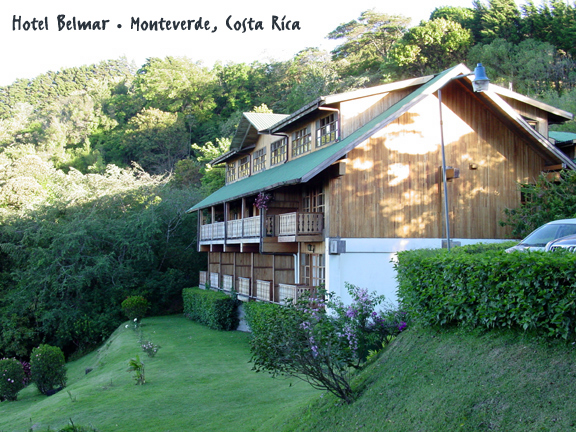

















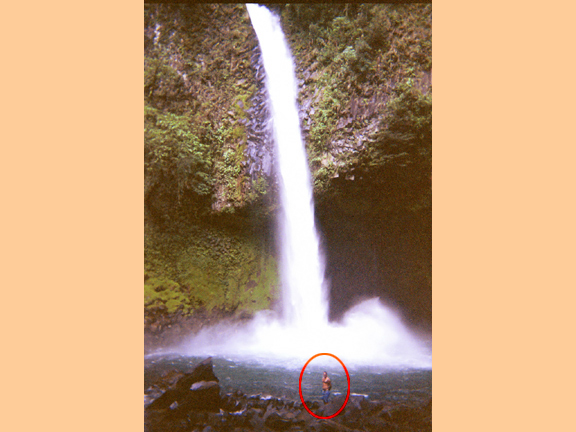


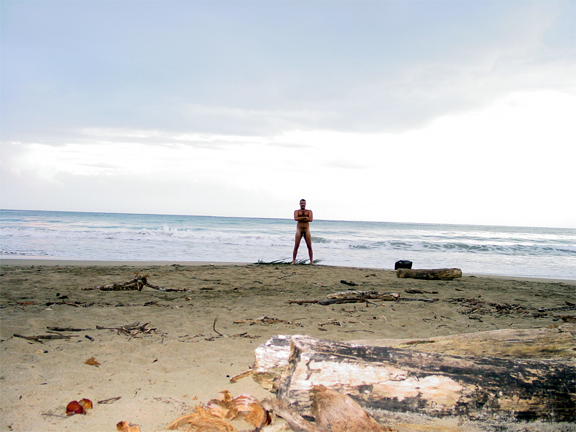
See the rest of the pictures on my Pinterest board.
See the rest of the pictures on my Pinterest board.
Tuesday, June 16, 2015
The Legend of Walks Far Raquel
Raquel Welch had a bee in her bonnet regarding her 1979 television acting debut The Legend Of Walks Far Woman; she wanted people to see it. But NBC Entertainment president Brandon Tartikoff saw no commercial potential, and shelved it when it was delivered to the network. This was especially disappointing to Welch who fought hard to get the film made and who co-produced it under the Raquel Welch Productions banner.
Welch stayed at the Northern Hotel in Billings while filming in the summer of 1979. She escaped the notice of many who had gathered to see her deplane at the Billings airport, but signed autographs after reaching her car.
FREE DOWNLOAD: I have a digital copy of The Legend Of Walks Far Woman.
It's 115 minutes and even with all the edits, it would behoove any fan of Raquel Welch to drop me an email.
I will then send you link from which you can download it.
Follow Michael,'s board Walks Far on Pinterest.Two dumb review links from People Magazine 1982: 1 and 2
It's 115 minutes and even with all the edits, it would behoove any fan of Raquel Welch to drop me an email.
I will then send you link from which you can download it.
Wednesday, June 3, 2015
Thanks For The Mammaries, Jim Bailey
'...dreamed of playing Broadway, and in 2001 landed a commitment from the Shubert Organization to open his biographical revue, Judy Garland Live! at one of its theatres on Oct. 16 of that year--50 years to the day after the real Garland opened a legendary stand at the Palace Theatre. The production was far along, with Joey McKneely signed to direct and choreograph and Ann Hould-Ward (Beauty and the Beast) providing the costumes. But after repeated delays the production failed to complete its capitalization and was finally "indefinitely" postponed.'Jim Bailey might not have 'played' Broadway (although in a 2009 interview he said he was in the chorus of several Broadway shows) but he certainly 'played' the dames that played Broadway. RIP.
Interesting to see how Carol Burnett sets Jim's performance up
for his first appearance on The Carol Burnett Show. First she
introduces Jim in a tuxedo, explains what he does with pictures,
and finally introduces his performance in full drag. Probably the
only way to get female impersonation on television back in 1972.
Kudos to Carol for introducing Jim to America.
Thursday, May 28, 2015
Little Natasha Ryan Cried Last Night
For television movies in the 1970s, the go-to actress to play an emotionally and physically abused little girl was Natasha Ryan. In films like Sybil (playing the title role as a little girl), The Amityville Horror and The Entity (taunted by spirits with James Brolin and Barbara Hershey respectively), the appealing Ms. Ryan left an indelible impression on those who watched her cinematic abuse.
This is a story about heading one place and ending up somewhere else. Natasha Ryan left Southern California nearly 14 years ago. "I was on my way to Canada and decided to stop three places," said Ryan. "One was Santa Fe. I liked it, so I stayed for a while. But I was curious about Wisconsin. So I tried that, too. But I came back to Santa Fe." Ryan was 23 at the time. Now 37, she lives atop a mountain in a cabin with no running water or electricity, but it's home - maybe the only place she's been able to call home since she was a child. "I didn't have a pretty childhood," said Ryan, who was raised by a foster family. Ryan said she worked in movies and television starting at the age of 1; by the time she was 13, she had appeared in 16 movies and television series. TV shows on her resume include Starsky and Hutch and movies include The Entity and The Day Time Ended. From 1975 to 1980 she played the young Hope Alice Williams in the soap opera Days of Our Lives. In 1976, at the age of 6, she played the role of young Sybil in the TV movie about a woman with multiple-personality disorder. When she turned 13, things changed.Nice to read that little Natasha Ryan is not crying anymore."Overnight I became a really fat, pimply, ugly kid, and I wanted to be like other 13-year-olds," she said. "I wanted a mohawk. I wanted to dye my hair and pierce everything. They wouldn't even let you get a tan in the summer. So I quit making movies." Ryan said she was kicked out of her foster home and ended up living on the streets in Venice, Calif. "The whole time I tried not compromising my morals for a burrito, and I tried to sleep," she said. "That's not an easy thing to do for a 14- year-old girl, to find a safe place to sleep." A few others on the streets became her protectors. "I called home several times, but my foster mother wouldn't let me come back," Ryan said. "So I continued living in an old brick building, The Ellison, with a working gigolo and drug addicts." Many Web sites are devoted to Ryan. "My 15-year-old daughter, Sienna - I named her after a crayon - told me there are a lot of Web sites about me. But I'm completely computer illiterate (and) haven't seen them." After years of doing the "Santa Fe shuffle" - working various jobs such as blowing glass, working with silver and leather and coaching in a gym - Ryan now works in construction. "I fell into the manhole of construction," she said. She and her crew do solar construction, plastering and anything else that needs to be done, and she saves every cent for her daughter's education. "Sienna is 15 and goes to Desert Academy," Ryan said. "Her passion is acting. Guess she got the gene." Her daughter's father lives in Santa Fe, and Ryan said Sienna spends more time there. "She's embarrassed about living in a hippie shack and bringing her friends here," she said. "But I hope some day she'll become part of a back-to-the-Earth revival and thank me." Ryan found her land in Glorieta when she was teaching a friend's daughter to drive. They went up a steep road and learned the land at the top was for sale. That was that. She said she lives frugally to save money. But some of her earnings will soon be spent on a Russian turtle she got as a gift. "It's only 6 months old, but it needs a climate that's constantly 90 degrees," she said. In the house, all the solar power goes to him. "It's this little guy that'll probably force me onto the grid so I can keep him cozy," Ryan said. "And I'm ready to take a shower in my own house."
Wednesday, April 15, 2015
How Clara Bow Broke Into The Movies
IT the full movie starring Clara Bow
WORLD INTERNET PREMIERE of How I Broke Into The Movies by Clara Bow.

How I Broke Into The Movies Clara Bow picture
Right click to open the image in a new tab.

How I Broke Into The Movies by Clara Bow
Right click to open the image in a new tab.
Following the phenomenal success of IT, Clara was the top female star in Hollywood for four years running (1927-1930). This time period included four of her sound films which negates the false impression that she stopped making movies because a thick Brooklyn accent got in the way of her transition to sound. She was actually afraid of the microphone and, because of her ability to make money for the studio, Paramount Pictures pushed her into talking films without training.
Clara sings I'm True To The Navy Now in Paramount on Parade from 1930.
The song was not in Clara's movie of the same name.
- Love Among The Millionaires from 1930 is listed as Poor Boy Rich Girl (although the embedded screen title is Rich Boy, Poor Girl). It's a musical romance in which Clara sings! (That's Worthwhile Waiting For, Believe It Or Not, I've Found My Man, Love Among the Millionaires, Rarin' To Go)
- The Saturday Night Kid from 1929 is listed as Love 'Em And Leave 'Em. Clara co-stars with the husky-voiced Jean Arthur very early in her career!!
- True To The Navy from 1930 is listed as The Girlfriend Of The Navy. Clara's future husband Rex Bell appears as well as Frederic March and uncredited turns from Frances Dee and Louise Beavers!!
- The Wild Party from 1930 is listed as Stella's Merits. Clara stars with Frederic March (again) and is directed by Dorothy Arzner!!
- Hoop-La from 1933 is listed as (surprise) Hoop-La and is Clara's last movie role. She was 28 when she left Hollywood and made almost as many sound features as she made silent ones.
- Wings (a 111 minute version) from 1927 is listed as The Shooting Star. The silent film is available on DVD at it's original length of almost two and a half hours and is the first winner of the Academy Award for Best Picture.
Parisian Love can be viewed here.
Rare film footage of Clara Bow in color
Clara Bow: Discovering the IT Girl, TCM documentary
Get Your Man a 1927 silent film, literally as this version has no musical soundtrack
I found this PDF on Dr. Macro's wonderful movie scan site
and uploaded it to archive.org for safe keeping.
Friday, February 20, 2015
Sugar-free Vegan Oatmeal Chocolate Chip Cookies
These (processed) sugar free vegan oatmeal chocolate chip cookies are delicious and very simple to make. Yes there are 14 steps in the recipe but I'm a technical writer so I have to make sure the process is completely and explicitly explained. A normal chef would write this recipe in five steps. (Rolled oats are gluten free unless processed in a facility which also processes glutenous grains like wheat so be sure to check the packaging on your oats if you want to be sure this cookie is gluten free.)
- 1 cup dates, packed
- 1 mushed up banana
- 2 Tbsp all natural almond butter or peanut butter
- 3/4 cup nut meal (ground from raw nuts: almonds, pecans, etc.)
- 3/4 cup rolled oats
- Add-ins: dried fruit, dairy-free chocolate chips, flaxseed, seeds, coconut, nut pieces
- Soak the dates for about an hour in a bowl of warm water.
- Drain the dates.
- Chop the dates, drop them in a bowl and mush them up.
When finished, they should almost (but not quite) be the consistency of a mushed up banana. - Speaking of a mushed up banana, add it and the almond butter to the dates and mix until combined.
- Add the nut meal and rolled oats.
I grind the nuts in a dedicated coffee bean grinder I use for nuts, flax seeds and the like. - Mix the mush until a loose dough is formed.
It should be wet and sticky. If it feels too wet to form into cookies, add more almond meal and/or oats. - Add 1/4 cup of your chosen add-in: dairy-free dark chocolate chips, raisins or nuts.
I've also added a handful of blueberries or a chopped up pear and neither made the dough any less sticky. - Chill the dough for 10 minutes while preheating the oven to 375 degrees F.
- At 10 minutes, mix the dough and chill it for another 10 minutes.
- Line a baking sheet with parchment paper.
- Scoop out 1 Tbsp amounts of the cookie dough and form into loose discs on the baking sheet.
They won’t expand so you can pack them close together (but not touching). - Bake for 20-35 minutes or until golden brown and somewhat firm to the touch.
The amount of time is dependent on how thick your cookie scoops are. The thicker they are, the more time in the oven. - Remove and let set for a few minutes on the pan, then carefully transfer to a plate or cooling rack to cool. Serve immediately.
- Store leftovers in an airtight container for several days, or move to the fridge or freezer for longer term storage.
Sunday, February 1, 2015
Hazel: The Maid With The Most
Miss Hazel Burke is a single white female who lives with, and works for, George and Dorothy Baxter and their young son, Harold. As chief cook and bottle washer she makes between $75 and $100 per week (including raises) and lives rent-free in a small room off the kitchen of the Baxter residence at 123 Marshall Road in Hydsberg, New York. She is a gregarious busybody with a penchant for telling old jokes and socializing with the other maids in the neighborhood in a collective known as The Sunshine Girls. Hazel's Social Security number is 111-07-7619 which tells us her card was issued somewhere between 1936 and 1950.
Hazel theme with lyrics by Sammy Cahn, music by James Van Heusen, sung by the Modernaires
only used in the closing credits of the first two episodes of season one
This pilot episode features Edward Andrews as Mr. B
the part played in the series by Don DeFore
From baking cookies to driving the Baxters to paying a toll Hazel
filmed a myriad of opening credits. Here is a mashup of five seasons worth.WORLD INTERNET PREMIERE
See my Pinterest page for more pictures of Shirley Booth and the cast of Hazel.
Follow Michael,'s board Hazel, the Maid with the Most on Pinterest.
See Peggy J. Shumate's Pinterest page for even more pictures of Shirley Booth and Hazel.
Hazel theme with lyrics by Sammy Cahn, music by James Van Heusen, sung by the Modernaires
only used in the closing credits of the first two episodes of season one
Good situation comedy makes the audience feel that the things that happen in their daily lives are important. By dramatizing these things -- actions as commonplace, perhaps, as cleaning out a closet or washing the dishes -- a show can make their lives more interesting.
- Diane Ladd (original Flo in Alice Doesn't Live Here Anymore) plays one of Mr. B’s many cousins, Sharlene.
- Harold Gould (Rhoda, The Golden Girls) appears in several seasons
- Robby the Robot (Forbidden Planet) appears as a maid in Hazel’s nightmare.
- Maidie Norman (The Well, What Ever Happened to Baby Jane, Airport ’77) is approached by Hazel to sign a petition to keep industry from razing a city park - if she is registered to vote. Ms. Norman, an African American woman, is registered. (I also spotted an African-American mailman and county employee in episodes of season 5.)
- Harvey Korman (The Carol Burnett Show, Blazing Saddles)
- James Stacy (Cagney and Lacey)
- Philip Ober (Vivian Vance's husband, I Love Lucy)
- Doris Singleton (Carolyn Appleby in I Love Lucy)
- Lurene Tuttle (Julia, vaudeville, radio)
- Ellen Corby (The Waltons)
- Jamie Farr (MASH)
- Alan Hale, Jr. (Gilligan's Island)
- Barbara Shelley (Village Of The Damned)
- Mabel Albertson (Jack Albertson's sister, What's Up Doc)
- William Schallert (The Patty Duke Show)
- Ken Berry (Mayberry RFD, Mama's Family)
- Dabney Coleman (9 to 5, Buffalo Bill)
- Leif Erickson (westerns among other gigs)
- Frank Gifford (football) plays himself looking to buy a bowling alley
- Claude Akins (Movin’ On, BJ and the Bear)
- Lee Meriweather (Miss America, Batman)
- Jack Dodson (The Andy Griffith Show, Mayberry R.F.D.)
- Bonnie Franklin has an uncredited walk-on in season five. Ironically ten years later she would star in One Day At A Time, the CBS situation comedy created and written by Whitney Blake. Blake herself was nixed for the part as being too old, much to her consternation.
- Don Kirshner (Rock Concert) is credited as a music consultant
This pilot episode features Edward Andrews as Mr. B
the part played in the series by Don DeFore
- George Mr. B Baxter (1961-1965) ... Don DeFore (wonderfully plays an endearing foil to Hazel)
- Dorothy Missy Baxter (1961-1965) ... Whitney Blake (a stunningly beautiful woman whose graciousness and love for Hazel shines)
- Harold Sport Baxter ... Bobby Buntrock (a charming child actor who died in a car accident at the age of 22, eight years after the series end)
- Rosie ... Maudie Prickett (Prickett plays kind-of prickly)
- Harvey Griffin ... Howard Smith (one of Mr. B's many clients and Hazel's many suitors)
- Deirdre Thompson (1961-1965) ... Cathy Lewis (played to the hilt by the underrated Lewis, Mr. B's snooty sister can never quite one up Hazel - not for lack of trying)
- Harriet Johnson (1961-1965) ... Norma Varden (wonderfully dotty)
- Herbert Johnson (1961-1965) ... Donald Foster (wonderfully dotty too)
- Harry Thompson (1961-1965) ... Robert P. Lieb
- Steve Baxter (1965-1966) ... Ray Fulmer
- Barbara Baxter (1965-1966) ... Lynn Borden
- Susie Baxter (1965-1966) ... Julia Benjamin
- Millie Ballard (1965-1966) ... Ann Jillian (It's A Living, Mae West)
- Mona Williams (1965-1966) ... Mala Powers
- Fred Williams (1965-1966) ... Charles Bateman
- Jeff Williams (1965-1966) ... Pat Cardi
- Smiley the dog (Harold's pet)
- Black cat (Susie's pet)
Special kudos to William D. Russell who directed 136 of 154 episodes: all of seasons 1 through 4 and 11 of 29 in season 5.
From baking cookies to driving the Baxters to paying a toll Hazel
filmed a myriad of opening credits. Here is a mashup of five seasons worth.
Season Four of the Hazel DVD set released by Shout Factory contains digital ephemera in the form of a Screen Gems promotional booklet for potential advertisers of the television series. It contains text about the show and the characters, some Ted Key illustrations and a preface by Peter Key, the cartoonist's son. I probably shouldn't have done this (since it's not technically public domain) but I've put this booklet to PDF. Email me for a download link.
Monday, December 22, 2014
Download Free Music From Your Library
Do you have a library card?

Freegalmusic.com allows anyone with a current library card to download three songs a week for free. These songs are 256 kbps, in the MP3 format and contain no DRM encoding. In my recent searches I have seen some music that is currently out-of-print but still downloadable from the library system - which must have some ragged old compact disc in a dusty branch somewhere. What a treat!
li·brary kard noun \ˈlī-ˌbrer-ē kard, -ˌbre-rē kard; British usually & US sometimes : identification that permits someone to temporarily take home literary, musical, artistic, or reference materials (as books, manuscripts, recordings, or films) that are kept in a building and are for use but not for saleI have a library card with the New York Public Library system. On my first perusal of the library system's web site one year ago this week, I found a link that lead me to Free Music!
Freegalmusic.com allows anyone with a current library card to download three songs a week for free. These songs are 256 kbps, in the MP3 format and contain no DRM encoding. In my recent searches I have seen some music that is currently out-of-print but still downloadable from the library system - which must have some ragged old compact disc in a dusty branch somewhere. What a treat!
Freegal also allows logged in users to stream three hours of music a day. FREE!To find out if you can download and stream using Freegal Music, you'll have to search the web site of your local library to see if they partner with Freegal. You can connect to the web site from the New York Public Library site using this link and check out the music selection ... but cannot log in (or download) without a valid library card. Recently I've downloaded:
- Carrie Underwood
- Mark Ronson
- Hozier
- Michael Jackson
- Bob Dylan
- Kaye Ballard
- Barbra Streisand
- Foo Fighters
- Beyonce
- Elvis Presley
- Pink Floyd
- Miley Cyrus
- Daft Punk
- Pitbull
- Miles Davis
- Meghan Trainor
Sunday, December 21, 2014
How Colleen Moore Broke Into The Movies

Portrait from How I Broke Into The Movies

How I Broke Into The Movies by Colleen Moore
Right click to open the image in a new tab.
Why Be Good? and Synthetic Sin are the last silent films Colleen made - although technically they are sound synchronized. In the time following Al Jolson's history-making You ain't heard nothin' yet, studios were transitioning to sound by releasing silent films with timed music and sound effects recorded to shellac discs. The disc was started when the movie began and thus movie and sound were synchronized. Why Be Good? and Synthetic Sin were both discovered in an Italian archive almost ten years ago; fortunately, the Vitaphone discs for Why Be Good? were complete and available but only the final disc of Synthetic Sin was found. For the theatrical showings and on disc, Why Be Good? is sound synchronized while Synthetic Sin has a piano score until the last reel when the disc is used.*
These pictures of domestic goddess Moore were published
in the January 1922 issue of Pantomime magazine.
Colleen's career started in 1917 with an appearance in The Bad Boy. She, like many other actresses of the time, wore her hair in long curls to emulate the most successful and highest paid actress of the time, Mary Pickford. It wasn't until 1923 when Colleen was begging First National Studio for the starring role in their film of the best-selling novel Flaming Youth that her mother offered this sage advice: Why don't we cut your hair and then make [the studio] give you a test for the part? Out came the scissors, Colleen got the part and Flaming Youth became her biggest film hit to date. The film made Colleen Moore a huge star (and for a time the highest paid actress in Hollywood). Girls everywhere cut their hair into a Dutch bob and copied her style of dress. Before Clara Bow, Louise Brooks and Joan Crawford, Colleen was the quintessential flapper.
This clip is all that remains of Flaming Youth the
film that put Colleen Moore, and flapperdom, on the map.
I've uploaded Colleen Moore's Ella Cinders with a custom score
using jazz tunes from the 1920s to both archive.org and YouTube.
A list of the songs and artists is below.*
This interview was published in a 1929 book by Lee Shippey called
Personal Glimpses of Famous Folks and Other Selections from the Lee Side o' L.A..
This interview was published in the March 1922 issue
of Pantomime magazine, an early Hollywood fan magazine.
pictures of Colleen from throughout her life and career.
- Henpecked Blues - Isham Jones & His Orchestra
- Hold Me - artist unknown
- Hot Mama - artist unknown
- Whispering - (Paul?) Whiteman
- Blue Rose - Free 20s Jazz Collection
- Bugle Call Blues - artist unknown
- Sing You Sinners - artist unknown
- Paddlin' Madelin Home - Isham Jones & His Orchestra
- Wabash Blues - Isham Jones & His Orchestra
- Alabama - Isham Jones & His Orchestra
- Cry - Isham Jones & His Orchestra
- Ivy - Isham Jones & His Orchestra
- Never Again - Isham Jones & His Orchestra
- When Eyes Of Blue Are Fooling You - Howard Lanin
Friday, December 12, 2014
What is Art ... Amnesty?

Courtyard at MOMA PS1
... are offering an opportunity for artists to dispose of their artwork at MoMA PS1, and to retire from making art. Beginning October 2, artists are invited to deposit their art in dumpsters located in the museum’s courtyard, which will be emptied as needed throughout the period of the Art Amnesty. Those who wish to exhibit their work one final time before it is destroyed may bring their art to the 2nd Floor Main Galleries, where museum staff will install it for public view. The museum will accept work under the Art Amnesty during regular hours, subject to certain restrictions outlined in the submission guidelines. The exhibition reprises and expands upon their Art Amnesty originally presented at Pierogi Gallery in 2002.

from Art Amnesty
Why are some people artists while others are not? Was Joseph Beuys an idiot when he said everyone is an artist? Do artists think they are a cut above the rest of us? Are the arts a good in themselves, or is it much, much, more complicated than that?

from Art Amnesty

Global Assimil- ation in Art Amnesty
- GLOBAL in yellow signifying the sun
- ASSIMIL- in blue signifying the sky
- ATION in brown signifying the earth

from Art Amnesty
PS: The day after my validation as an artist at MOMA PS1 I went grocery shopping and was asked to sign my credit card slip. When I handed the signed slip back to the cashier she told me I had the signature of an artist. That's two validations as an artist in one week!

Teatro Romano

Mirrors as The Flat Side of the Knife

from Zero Tolerance
Thursday, November 27, 2014
Fast & Easy & Spicy (Oh My) Pumpkin Seeds
- 2 cups raw pumpkin seeds
- 1½ tablespoons olive oil
- 1/2 teaspoon hot pepper sauce
- 1/4 teaspoon paprika
- 1/4 teaspoon ground black pepper
- 1/4 teaspoon coarse sea salt (crushed)
- 1/4 teaspoon red pepper flakes (crushed)
- Preheat oven to 250°
- Crush the salt and red pepper flakes using your mortar and pestle
- Combine all spices in a small bowl
- Toss raw pumpkin seeds in oil/hot sauce mixture
- Add spice mixture to seeds, tossing all as you pour
- Bake seeds on foil covered cookie sheet for 50 minutes, tossing the seeds with a spatula every ten minutes or so
- Refrigerate water with ice cubes for medicinal purposes
Sunday, November 9, 2014
A Brief History of Plastic Surgery in Hollywood
1927
See Mabel Normand in the two reeler on archive.org.
1973
In 1973, Elizabeth Taylor has a face lift in the hopes of saving her marriage (to Henry Fonda in a small, yet pivotal role). The film was considered quite controversial back in the day for its interpolation of graphic footage of a face lift procedure.See Elizabeth Taylor in Ash Wednesday on YouTube
or email me for a link to download a VHS rip.
2014
In 2014, Renée Zellweger walks the red carpet after years out of the spotlight.Bonus: Totie Fields Talks Plastic Surgery
In what looks to be the late 1960s Merv Griffin had discussions with plastic surgeon Dr. Kurt Wagner on his eponymously titled talk show. Guests included Victor Borge and Totie Fields. Totie Fields is a big supporter of plastic surgery. Interestingly many believe that it was the plastic surgery she had on her eyes which initiated the health issues that lead to her death. For more information on the life and career of comedian Totie Fields, see Totie Fields: A Blography.
Subscribe to:
Posts (Atom)